
Dates Grades and Standards

Dates are a fruit cultivated from date palm (Phoenix dactylifera), commonly known as the date palm, is a flowering-plant species in the palm family, Arecaceae, cultivated for its edible sweet fruit called dates. Dates (also called Tamar or Kurma) are one of the most important and oldest fruits associated with Middle East and the Islamic history. Noticeably, type of dates are vital and staple source of food for almost all families in the Middle East. One of the reasons is that dates for muslims are holy fruits. Not to forget that dates are one of the oldest cultivated fruits in the history. The species is widely cultivated across northern Africa, the Middle East, the Horn of Africa, Australia, South Asia, and California. It is naturalized in many tropical and subtropical regions worldwide. P. dactylifera is the type species of genus Phoenix, which contains 12–19 species of wild date palms.
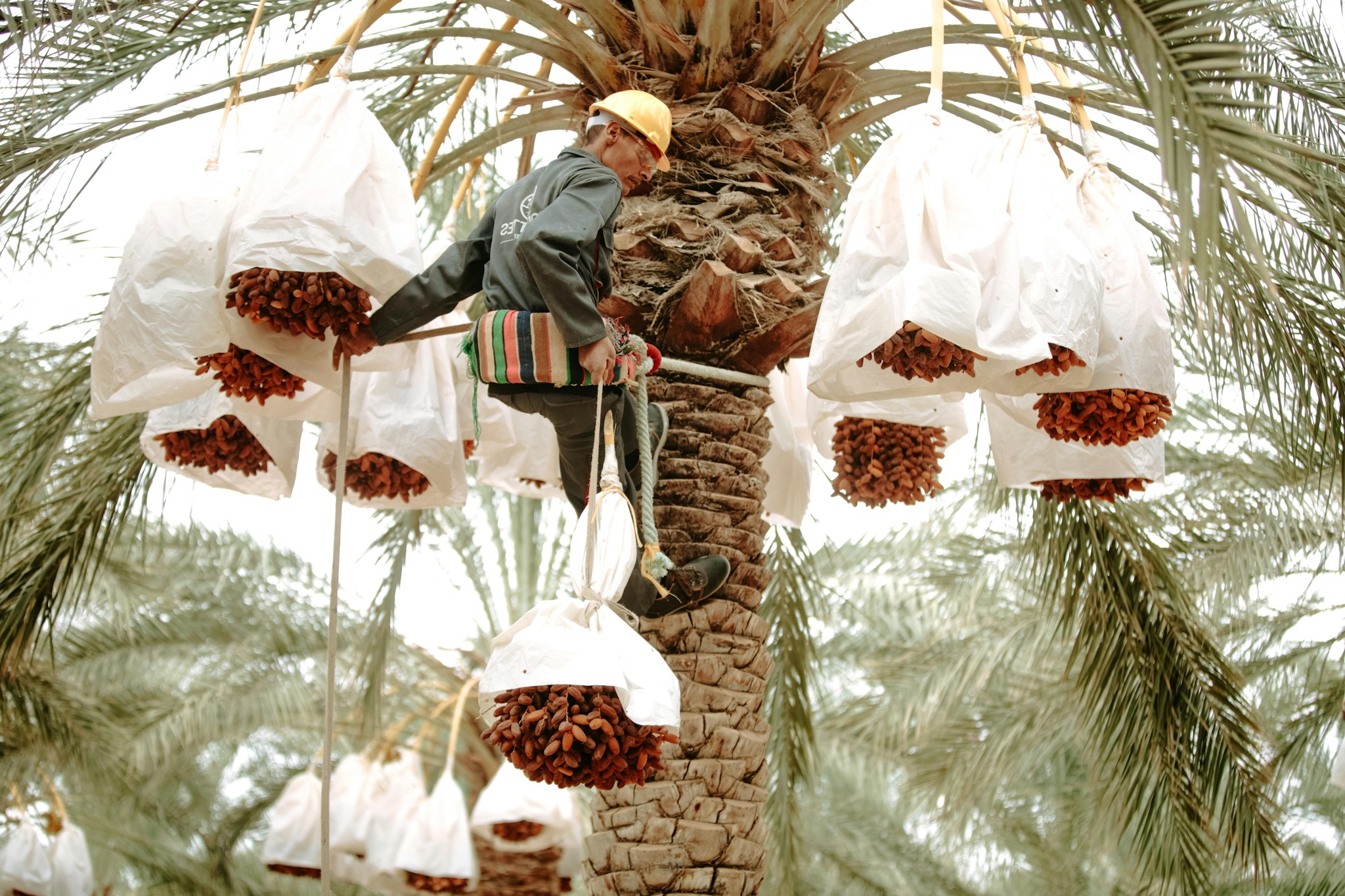
USDA Dates Grades and Standards
USDA Grades and Standards for Dates: A Deep Dive into Quality Assurance
The United States Department of Agriculture (USDA) has established a rigorous grading system for dates to ensure consistency, safety, and quality across domestic and international markets. These standards not only guide producers and processors but also help consumers and importers identify premium fruit based on appearance, texture, and integrity. The grading system is codified under 7 CFR Part 52 Subpart D, and administered by the Agricultural Marketing Service (AMS).
Styles of Dates
The USDA recognizes several styles of dates, each with distinct processing and handling characteristics:
|
Style |
Definition |
|
Whole |
Intact dates with pits; may be slit longitudinally for inspection or processing |
|
Pitted |
Whole dates with pits removed; often used in retail packaging or stuffing |
|
Dry (for Processing) |
Dates that are fully cured and not softened by hydration; ideal for industrial use |
|
Pieces |
Dates cut into small, uniform chunks; used in baking, cereals, and snacks |
|
Macerated |
Ground, mashed, or broken dates that cannot be handled individually; used in pastes and fillings |
These styles are evaluated differently depending on their intended use—whether for direct consumption, baking, or further processing.
USDA Grade Definitions
The USDA grades dates based on varietal purity, color, size uniformity, freedom from defects, and overall character. Each grade corresponds to a numerical score out of 100, derived from four key quality factors.
|
Grade |
Applicable Styles |
Requirements |
Score Threshold |
|
U.S. Grade A (Fancy) |
Whole or Pitted |
One variety; good color; practically uniform size; practically free from defects; excellent character |
≥ 90 points |
|
U.S. Grade B (Choice) |
Whole or Pitted |
One variety; reasonably good color and size; reasonably free from defects; good character |
≥ 80 points |
|
U.S. Grade B (Dry) |
Whole Dry Dates for Processing |
Same as Grade B, but for dry dates; used in industrial applications |
≥ 80 points |
|
U.S. Grade C (Standard) |
Whole, Pitted, Pieces, Macerated |
One variety or mixed pieces; fairly good color and size; fairly free from defects; acceptable character |
≥ 70 points |
|
U.S. Grade C (Dry) |
Whole Dry Dates for Processing |
Same as Grade C, but for dry dates |
≥ 70 points |
|
Substandard |
All Styles |
Fails to meet minimum requirements of Grade C or Grade C (Dry); not suitable for certification |
< 70 points |
These grades are used in inspection certificates, labeling, and marketing claims, and help buyers assess value and suitability for specific uses.
Scoring System: Factors of Quality
Each date sample is evaluated on four scored factors, with a maximum of 100 points:
|
Factor |
Max Points |
Description |
|
Color |
20 |
Uniformity and appropriateness of color for the variety; lighter or darker tones must be consistent |
|
Uniformity of Size |
10 |
Applies to whole and pitted styles; dates must be similar in size with minimal outliers |
|
Absence of Defects |
30 |
Includes freedom from blemishes, decay, sugar crystallization, splitting, mold, and insect damage |
|
Character |
40 |
Assesses texture, moisture level, firmness, and overall appearance; includes flavor and aroma quality |
For pieces and macerated dates, size uniformity is not scored. Instead, the total score is calculated by multiplying the sum of the other three factors by 100/90, then rounding down.
Iranian Dates Grades and Standards
Iranian Date Grades and Standards
Iran’s date‐export industry follows national specifications (ISIRI) aligned with Codex benchmarks. Dates are first sorted by moisture category, then graded on appearance, size, and defect tolerance. Below is a consolidated table of the typical Iranian grading system:
Iranian Grade | ISIRI Reference | Codex Equivalent | Moisture Category | Max Defects Allowance | Size Uniformity | Typical Varieties |
Super Premium (فوق ممتاز) | ISIRI 9192–2004 Grade A | Extra | Soft (> 25 %)<br>Semi-dry (14–25 %) | ≤ 2 % blemished, unripe, fermented or moldy | Practically uniform | Mazafati, Piarom, Sukkari |
Premium (ممتاز) | ISIRI 9192–2004 Grade B | Class I | Soft (> 25 %)<br>Semi-dry (14–25 %) | ≤ 4 % blemished/unripe;<br>≤ 2 % loose pits | Reasonably uniform | Rabbi, Deglet Noor, Zahedi |
First Commercial (درجه یک) | ISIRI 9192–2004 Grade C | Class II | Semi-dry (14–25 %)<br>Dry (< 14 %) | ≤ 10 % blemished, unripe or mixed varieties | Fairly uniform | Khudri, Sayer, Kabkab |
Standard (تجاری) | ISIRI 9192–2004 Unclassified | Substandard | Any | > 10 % defects | No uniformity requirement | Lesser-grade lots for processing |
Key points:
- Moisture Categories
- Soft/wet dates (e.g., Mazafati, > 25 % moisture) require refrigeration.
- Semi-dry dates (e.g., Deglet Noor, 14–25 % moisture) store at room temperature.
- Dry dates (e.g., Zahedi, < 14 % moisture) have the longest shelf life.
- Defect Allowances mirror Codex tolerances for unripe, blemished, moldy, or fermented fruits.
- Size Uniformity applies to all but Standard grade; higher grades demand tighter size ranges.
- ISIRI 9192–2004 is Iran’s national standard for date fruits, closely following Codex Alimentarius CXS 143.
Want label-examples, export tolerances for specific varieties, or packaging requirements? Let me know!