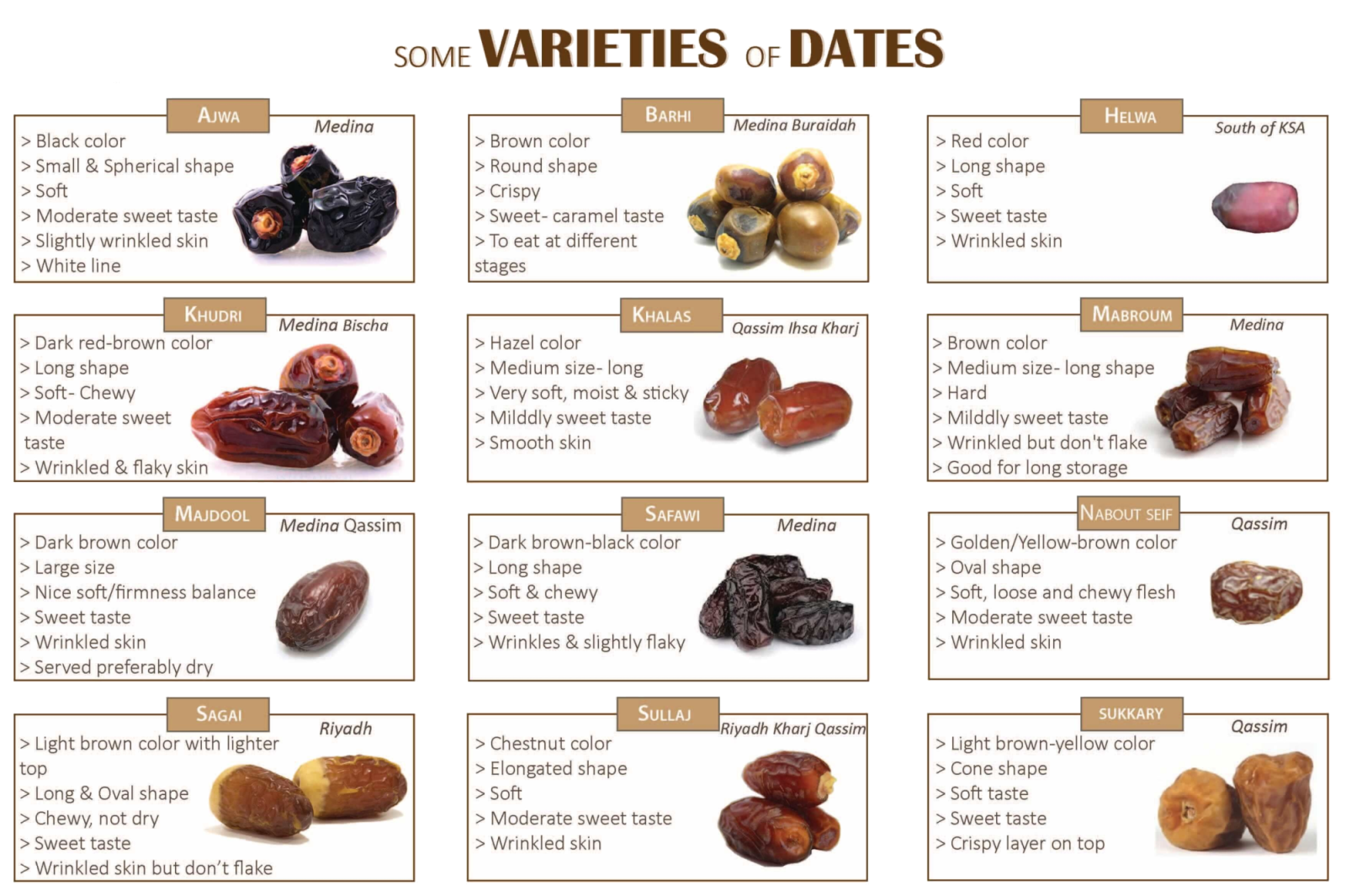
Here’s a curated list of popular date cultivars from around the world, categorized by texture and origin. There are over 400 known varieties, but these are among the most widely recognized and commercially important:
Date Cultivars by Texture
Cultivar | Texture | Origin | Flavor Notes |
Medjool | Soft | Morocco | Rich caramel, honey |
Mazafati | Soft | Iran | Chocolatey, moist |
Barhi | Soft | Iraq | Butterscotch, syrupy |
Ajwa | Soft | Saudi Arabia (Medina) | Prune-like, earthy |
Sukkari | Soft | Saudi Arabia | Honeyed, melt-in-mouth |
Safawi | Semi-dry | Saudi Arabia | Caramel, toffee |
Mabroom | Semi-dry | Saudi Arabia | Mild, fruity, chewy |
Khalas | Semi-dry | Saudi Arabia/UAE | Buttery, balanced sweetness |
Deglet Noor | Semi-dry | Algeria/Tunisia | Nutty, mild honey |
Zahidi | Semi-dry | Iraq | Nutty, less sweet |
Rabbi | Semi-dry | Iran | Caramel, slightly nutty |
Piarom | Semi-dry | Iran | Toffee-like, diabetic-friendly |
Thoory | Dry | Algeria | Nutty, firm |
Fard | Dry | Oman | Mildly sweet, chewy |
Khudri | Dry | Saudi Arabia | Raisin-like, caramel |
Khadrawy | Soft | Iraq | Smooth, moist, sweet |
Halawy | Soft | Iraq | Creamy, honey-like |
Dayri | Soft | Iraq | Rich, dark, sweet |
Anbara | Soft | Saudi Arabia | Velvety, intensely sweet |
Sag‘ai | Semi-dry | Saudi Arabia | Crisp, fibrous, mild sweet |
Sayer | Semi-dry | Iran | Dense, caramel-like |
Regional Highlights
- Middle East: Home to Ajwa, Sukkari, Safawi, Khalas, Khudri, Mabroom, and Sag‘ai
- North Africa: Deglet Noor, Thoory, Halawy
- Iran: Mazafati, Rabbi, Piarom, Sayer
- United States: Medjool and Deglet Noor are widely cultivated in California and Arizona
When Are Dates in Season? A Guide to Harvesting and Availability
Date palms (Phoenix dactylifera) have been cultivated for over 6,000 years, resulting in a dazzling array of cultivars—each shaped by geography, climate, tradition, and taste. While estimates suggest there are 250 to 400 named varieties, only a few dozen have achieved global commercial prominence. Below is a deeper dive into the most celebrated cultivars, categorized by moisture content and culinary use, along with cultural and agricultural context.
Soft Dates
These varieties are high in moisture, often harvested at the Rutab stage, and prized for their velvety texture and intense sweetness. They’re typically eaten fresh and are less suited for long-term storage.
Cultivar | Origin | Flavor Notes | Highlights |
Medjool | Morocco, USA | Caramel, honey, brown sugar | Known as the “King of Dates”; large, luscious, and widely exported |
Barhi | Iraq, USA | Butterscotch, syrupy | Enjoyed at all ripeness stages; fragile and seasonal |
Sukkari | Saudi Arabia | Honey, sugarcane | Called the “Queen of Dates”; soft and golden |
Mazafati | Iran | Chocolate, molasses | High moisture; often refrigerated or frozen |
Halawi | Iraq | Creamy, nutty, honeyed | Small to medium size; melts in the mouth |
Khudrawy | Iraq, USA | Mildly sweet, smooth | Soft and dark; best eaten fresh |
Anbara | Saudi Arabia | Rich, velvety sweetness | Large and luxurious; often gifted |
Empress | USA (Thoory seedling) | Soft, sweet, nutty | Hybrid cultivar with improved texture |
Semi-Dry Dates
These cultivars strike a balance between chewiness and sweetness, making them ideal for snacking, baking, and export. They have moderate moisture and longer shelf life than soft dates.
Cultivar | Origin | Flavor Notes | Highlights |
Deglet Noor | Algeria, Tunisia, USA | Mild, honey-like | “Date of Light”; translucent amber flesh |
Zahidi | Iraq | Nutty, less sweet | Excellent for date sugar and syrup |
Khadrawy | Iraq | Smooth, moist | Popular in Iraq and California |
Piarom | Iran | Toffee, chocolate | Diabetic-friendly; low glycemic index |
Dayri (Dairi) | Iraq | Rich, dark sweetness | Turns black when ripe; soft and slender |
Fardh | Oman | Mildly sweet, tender | Small seed; long shelf life |
Rabbi | Iran | Caramel, nutty | Exported widely; reddish-black skin |
Sayer (Sayir) | Iran | Dense, caramelized | Used in syrups and industrial baking |
Sagai (Segai) | Saudi Arabia | Brown sugar, crisp tip | Two-toned appearance; crunchy rim |
Mabroom | Saudi Arabia | Mild, fruity, chewy | Premium variety; elongated shape |
Safawi | Saudi Arabia | Toffee, earthy | Black and velvety; medicinal reputation |
Kenta | Tunisia | Mild sweetness | Light golden skin; semi-dry texture |
Dry Dates
These cultivars are low in moisture, often harvested at the Tamr stage, and are ideal for long-term storage, baking, and grinding into date powder. Their firm texture and concentrated sweetness make them versatile.
Cultivar | Origin | Flavor Notes | Highlights |
Thoory (Thuri) | Algeria | Nutty, mildly sweet | Known as “bread date”; great for baking |
Khudri | Saudi Arabia, Egypt | Caramel, chewy | Affordable and widely exported |
Ajwa | Medina, Saudi Arabia | Prune-like, earthy | Sacred in Islam; rich in antioxidants |
Dates are harvested in three main ripeness stages—Khalal, Rutab, and Tamr—and different cultivars peak at different times depending on climate and region. Here’s a seasonal breakdown of popular date varieties:
Summer (July–August)
These dates are harvested early, often at the Khalal (crunchy) or early Rutab (soft) stage.
Cultivar | Region | Ripeness Stage | Notes |
Barhi | Iraq, USA | Khalal/Rutab | Enjoyed fresh; apple-like crunch |
Halawi | Iraq | Rutab | Creamy, honey-sweet |
Khadrawy | Iraq, USA | Rutab | Soft, mild sweetness |
Hayani | Egypt | Khalal | Dark-red, juicy |
Sukkari | Saudi Arabia | Rutab | Golden, honey-like |
Late Summer to Early Fall (August–October)
This is peak harvest season for most date varieties, especially in California and the Middle East.
Cultivar | Region | Ripeness Stage | Notes |
Medjool | Morocco, USA | Rutab/Tamr | Large, caramel-rich |
Deglet Noor | Algeria, Tunisia | Tamr | Semi-dry, nutty flavor |
Zahidi | Iraq | Tamr | Semi-dry, good for baking |
Mabroom | Saudi Arabia | Tamr | Chewy, premium quality |
Safawi | Saudi Arabia | Tamr | Dark, velvety, medicinal use |
Khalas | Saudi Arabia, UAE | Rutab/Tamr | Balanced sweetness, versatile |
Segai | Saudi Arabia | Rutab/Tamr | Two-toned, crunchy tip |
Winter (November–January)
These dates are fully dried and harvested late or stored from earlier seasons.
Cultivar | Region | Ripeness Stage | Notes |
Ajwa | Saudi Arabia | Tamr | Sacred, prune-like flavor |
Khudri | Saudi Arabia | Tamr | Chewy, caramel notes |
Thoory | Algeria | Tamr | Dry, nutty; “bread date” |
Fardh | Oman | Tamr | Tender skin, small seed |
Piarom | Iran | Tamr | Toffee-like, diabetic-friendly |
Seasonal Notes by Region
- Middle East & North Africa: Harvest begins as early as July, peaks in September, and ends by October.
- California (USA): Medjool and Deglet Noor are harvested August–October.
- South Asia: Harvest typically runs August–September.
Would you like a visual calendar or a chart comparing ripeness stages across varieties? I can whip one up!
Different Types of Dates